Google just changed how its bidding works.
And one part of it has a deadline.
Here is the short version: from 17 August, some of your best Google Ads campaigns could quietly start costing more. Not because you did anything wrong.
Because Google is closing a gap you have probably been benefiting from without realising.
If you run Google Ads, or pay someone to, this is the one to understand before August.
Let us break it down.
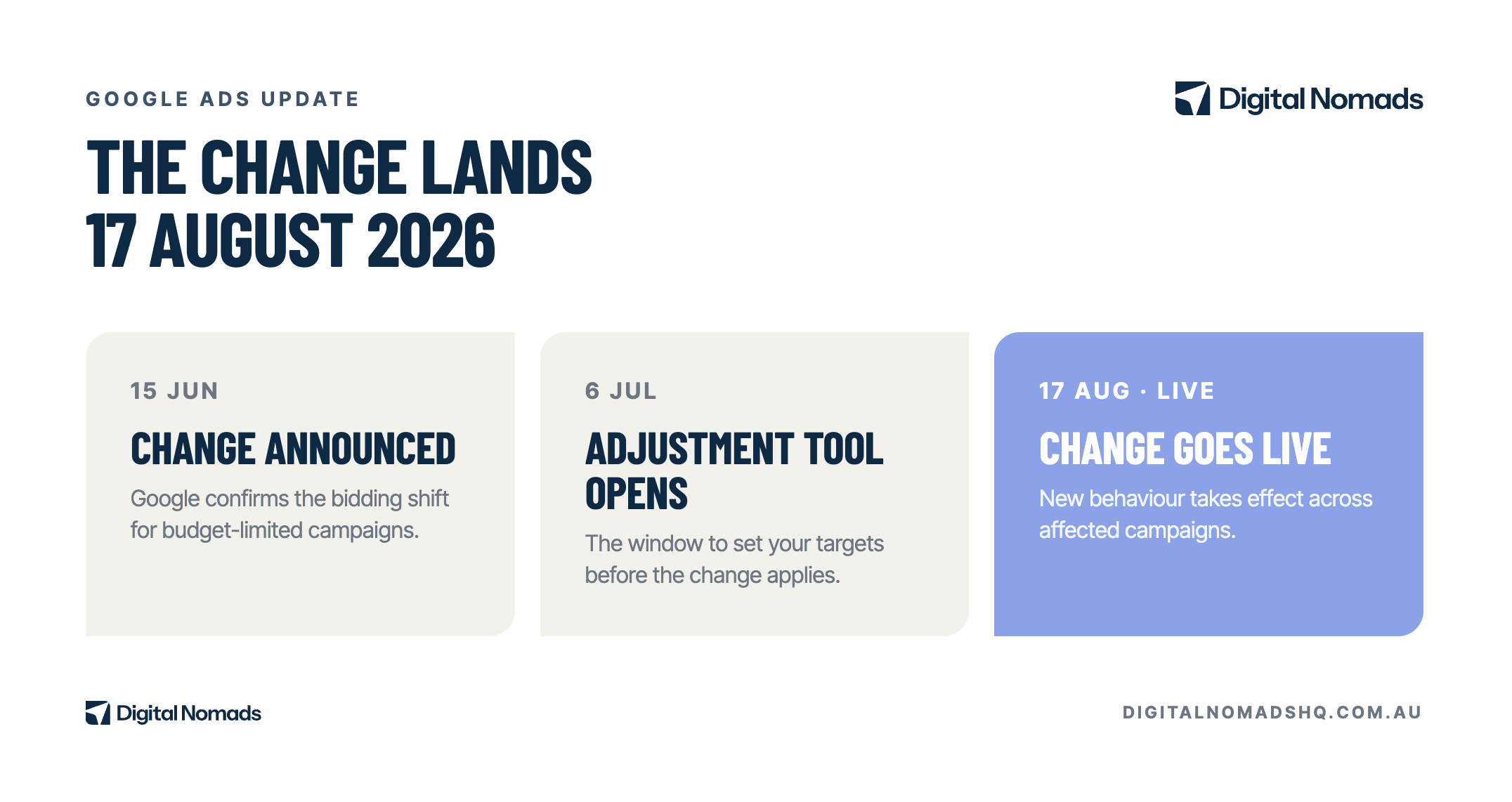
The change with a deadline: Bidding Target Optimisation
This is the one main aspect to act on… so let’s start here.
Right now, loads of budget-capped campaigns quietly beat their targets.
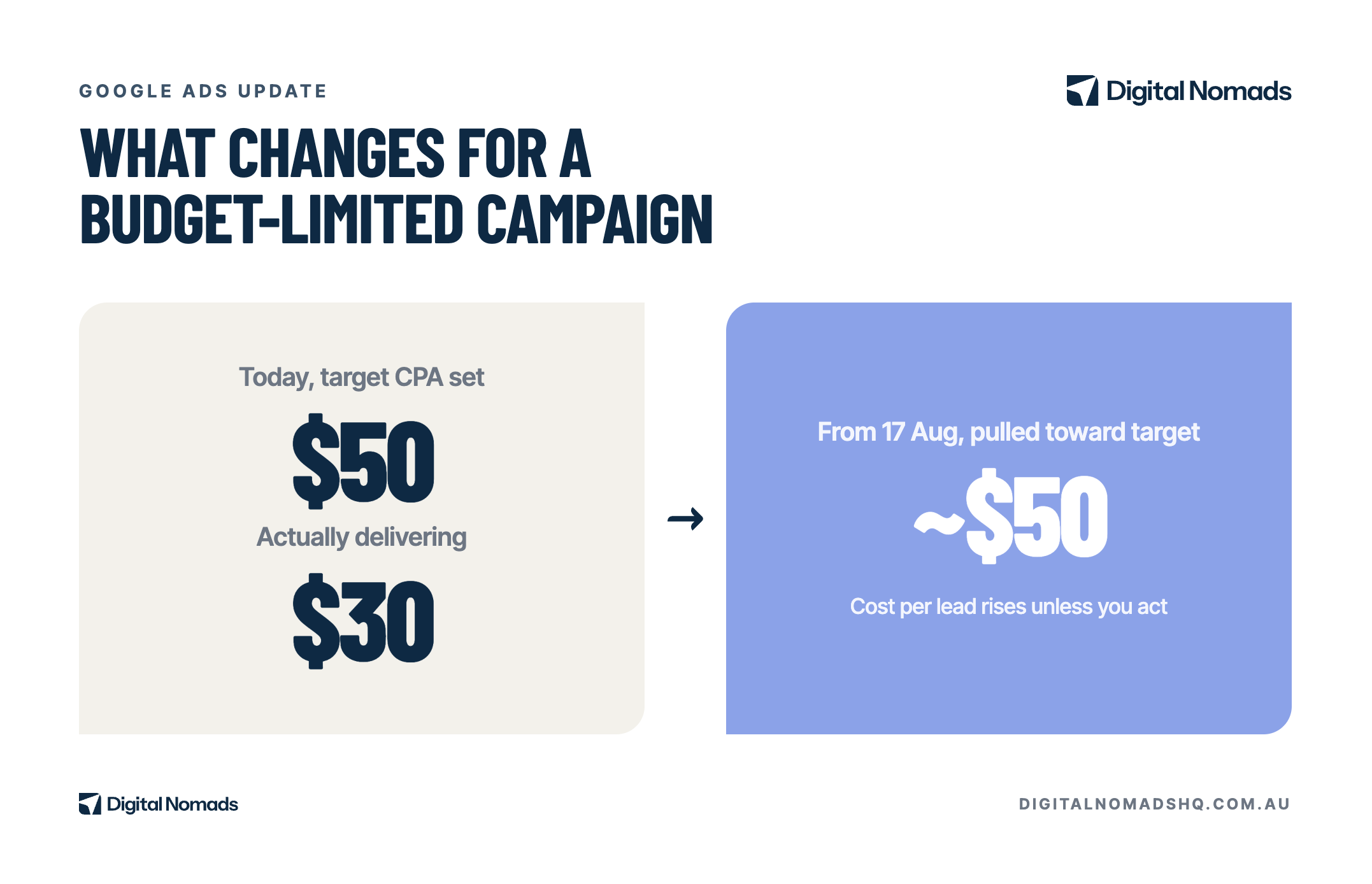
You set a Target CPA of $50.
But because the campaign is limited by budget, it has actually been pulling leads in at $30.
You have been getting a better result than you asked for.
You might not have even noticed.
From 17 August, Google is closing that gap.
For campaigns marked “Limited by budget” that use Target CPA or Target ROAS, performance will line up more closely with the target you set.
Google calls it more consistent and predictable.
Here is the catch.
If your capped campaigns have been over-delivering, your cost per lead could climb, or your ROAS could slip, back toward the number sitting in your settings.
It hits Search, Shopping, Performance Max, Demand Gen and Travel campaigns.
And one thing to be clear on: Google will not touch your targets or budgets for you.
The shift happens automatically.
What you do about it is on you.
What to do about it
Before 17 August, go through every campaign that is Limited by budget and running Target CPA or Target ROAS.
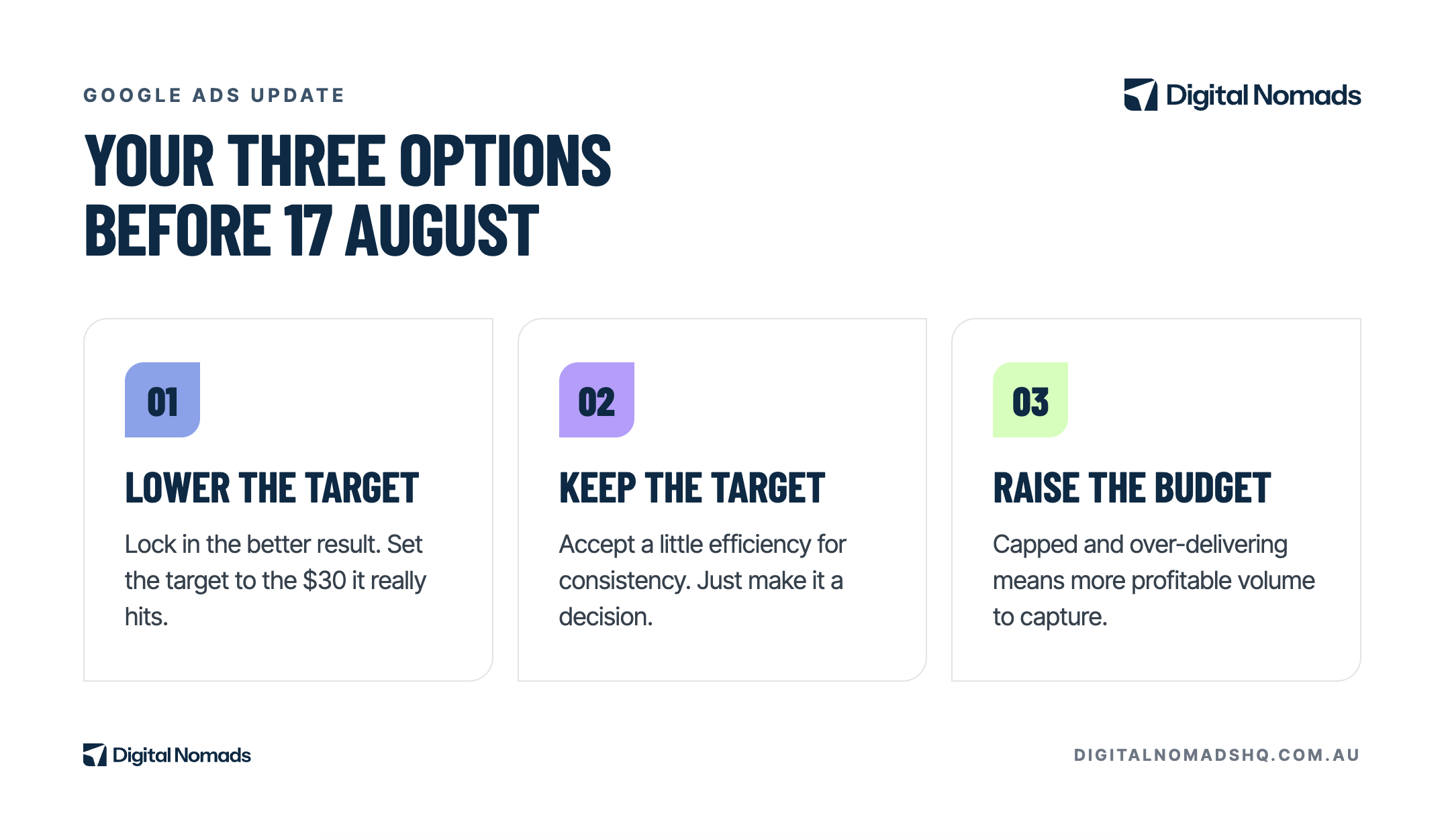
For each one, you have three honest options.
Lock in the better result. If a capped campaign has been over-delivering and you want to keep that, lower the target to match what it is actually doing.
Set the Target CPA to the $30 it is really hitting, not the $50 you typed in six months ago. For most over-delivering campaigns, this is the move.
Keep your targets as they are. Happy to trade a bit of efficiency for the consistency Google is offering? Do nothing. Just make it a decision, not an accident.
Turn the budget up. A capped campaign that is beating its target is usually telling you there is more profitable volume out there. Lift the budget and go get it at your stated target, instead of leaving it boxed in.
Google is rolling out a Bid Target Adjustment Tool from 6 July to help, you will get a notification in your account.
It shows each campaign’s history and lets you apply new targets in a few clicks. That is your window. This kind of account hygiene is exactly what we handle as part of Google Ads management.
The other two changes are upside, not homework
Smart Bidding Exploration, expanded
This one lets you set a ROAS tolerance so your campaigns can chase conversions from searches they are not currently catching.
A controlled way to find new, profitable demand.
As of 15 June it is live in all Performance Max campaigns without product feeds, globally, with a beta rolling out to Shopping and feed-based PMax. Google says campaigns using it see an 18% lift in unique converting query categories and 19% more conversions on average. If growth is the goal, test it.
Promotion Mode (beta)
Got a sale, a launch, a peak season?
Promotion Mode lets you temporarily loosen your ROAS tolerance and add budget for that window, then ease back, without rebuilding the campaign. It is in beta for Search and Performance Max.
For retailers and anyone with seasonal spikes, this is a genuinely handy way to lean in hard when it counts.
And a name change
Our take
Google is selling the big change as consistency. For some accounts, fair enough, that is welcome.
But be clear-eyed. If your capped campaigns have been over-delivering, this can quietly hand back some of that efficiency unless you act.
The worst outcome is sleepwalking into higher costs because nobody checked the targets before 17 August.
And here is the deeper bit.
All of this, the target optimisation, the exploration tolerance, the promotion boosts, is only as good as the conversion data underneath it. Automated bidding optimises toward the signals you feed it.
So clean tracking and accurate targets are what turn these changes into a win instead of a cost.
The accounts that come out ahead in August will be the ones that were actually managed. Not set and forgotten.
Want us to review your campaigns before 17 August, or just take the bidding off your plate? Talk to our Google Ads team, or see how we run performance marketing end to end.
Frequently asked questions
What is changing in Google Ads on 17 August 2026?
For campaigns that are Limited by budget and use Target CPA or Target ROAS, Google will deliver performance that lines up more closely with the target you set. Many of those campaigns currently beat their targets, so this can push cost per lead up, or ROAS down, toward your stated number unless you adjust.
Will Google change my targets or budgets automatically?
No. The performance shift is automatic, but Google will not change your targets or budgets for you. You decide: lower targets to lock in current performance, keep your targets, or lift the budget to scale.
What is the Bid Target Adjustment Tool?
A tool rolling out in Google Ads from 6 July 2026, flagged by a notification in your account. It shows each campaign’s history and lets you review and apply updated targets fast, ahead of 17 August.
What should I actually do before 17 August?
Go through every Limited by budget campaign on Target CPA or Target ROAS. For each, decide whether to lower the target to keep the better performance it has been delivering, keep the target, or raise the budget to scale. Do not leave it to chance.
What are Smart Bidding Exploration and Promotion Mode?
Two opportunity features from the same announcement. Smart Bidding Exploration lets you set a ROAS tolerance to catch new converting queries (now in PMax without feeds, with a beta for feed-based campaigns). Promotion Mode lets you temporarily boost ROAS tolerance and budget for peaks like sales, in beta for Search and Performance Max.