If you’ve spent any time in SEO circles over the past couple of years, you’ve probably heard the term “parasite SEO” thrown around. Some people call it a black-hat shortcut.
Others call it a legitimate strategy.
And Google? Google calls it “site reputation abuse” … and they’ve built an entire spam policy to target it.
The truth, as usual, sits somewhere in the middle. Parasite SEO isn’t inherently good or bad. It’s a technique… and like most techniques, whether it helps or hurts you depends entirely on how you use it.
In this guide, we’ll break down exactly what parasite SEO is, how it works in practice, the difference between the white-hat and black-hat versions, what Google’s doing about it, and whether it’s a strategy worth considering for your business in 2026.
What Is Parasite SEO?
First things first – what exactly is Parasite SEO?
Piggyback SEO, barnacle SEO, or authority jacking, are all essentially the same name for a digital marketing tactic that allows you to publish content on high-authority, external sites. Instead of having to build your own domain authority, you are leveraging the trust and traffic of these already-established platforms. With Parasite SEO, you can gain visibility and traffic for some pretty competitive keywords without needing a massive, independent web presence.
Parasite SEO Techniques & Strategies
Parasite SEO comes in many forms, and the strategy you use will depend on the platform and your goals.
- Guest Blogging: Here you are writing articles for popular websites within your industry, usually with one or more backlinks to your own site.
- Forums & Q&A Sites: By actively engaging in discussions on platforms like Reddit, Quora, or niche-specific forums, you can provide valuable insights and strategically insert relevant links to your website. (PRO TIP: Keep it natural! You want to genuinely contribute to the conversation and avoid spammy tactics as many platforms have strict moderation policies.)
- Press Releases: Another way to generate brand awareness and backlinks is by distributing newsworthy press releases through high-authority press distribution platforms. This can showcase important company updates, product launches, or industry insights while leveraging the credibility of these outlets to drive traffic and awareness.
- Social Networking Platforms: Websites like Facebook, LinkedIn and X can tap into the massive audiences these platforms offer. With high domain authority and large user bases, these platforms can boost your visibility and drive targeted traffic to your site, especially when your posts gain traction and are shared with others.
Let’s Take A Look At A Real Life Example:
Originally published in 2021, Brittany Risher, a writer, editor and digital strategist who focuses on health and lifestyle content, wrote a blog on the “5 Tips for Living Your Strongest, Healthiest Life Yet”.
This article has ranked in the top 10 positions for a number of competitive keywords including “benefits of a healthy lifestyle” (KD 85) since its publishing and continues to gain a fair amount of traffic and rankings.
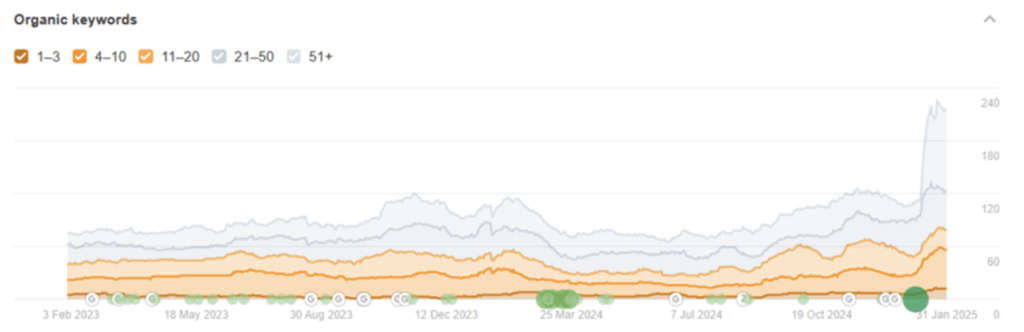
According to the graph, we see a jump in keywords at the start of the year, after the article was reviewed and updated.
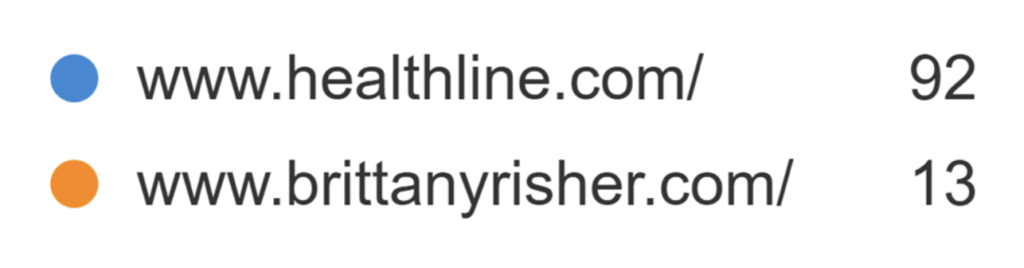
While Brittany has her own website, Healthline has a DR of 92 (compared to a DR of 13). This means that her article has a much better chance of ranking on Healthline rather than her own site, gaining more visibility, and traffic and ultimately building her authority as a professional in the space.
Should You Use Parasite SEO? Risks vs Benefits
The benefits (when done right)
Faster rankings for competitive keywords. This is the primary draw. Content on a DR 85 site can rank in weeks for keywords that would take months or years on your own domain.
Audience access without building readership from scratch. Publishing on established platforms puts your content in front of audiences that already exist. LinkedIn has 900+ million members. Medium has 100+ million monthly readers.
Brand credibility by association. Being published on reputable sites builds trust with potential customers. A byline on a respected industry publication signals expertise.
Backlink and referral traffic opportunities. Most guest contributions include at least one link back to your site. That’s a genuine, editorially earned backlink… the kind Google values.
The risks (when done wrong)
Google penalties. The Site Reputation Abuse policy is now actively enforced. If your content is flagged, both you and the host site can lose rankings.
No control over the content long-term. The host site can edit, remove, or redirect your content at any time. You can’t update it, optimise it, or track it in your own Search Console.
Dependency on external platforms. If parasite SEO is your only strategy, you’re building your visibility on rented land. Algorithm changes, policy updates, or the host site’s own problems can wipe out your rankings overnight.
The Risks of Parasite SEO
Parasite SEO can be tricky to master. Many marketers see great success, but it’s not a long-term SEO solution. Sponsored posts and guest articles may bring traffic while they rank, but if the host site gets penalised or removes your content, those gains disappear. It’s also difficult to control. Once it’s published there is no easy way to update it, change copy or optimise SEO elements like you would on your site.
And, since you are publishing on a third-party site, the site’s authority, not your own, is what ranks – which can limit your long-term brand awareness and recognition. If it is your only SEO strategy and it’s the only content that ranks, that means you are relying on an external site for your visibility and online presence.
The Benefits Of Parasite SEO
Don’t let the risks scare you away. Parasite SEO can definitely be a game-changer.
We’ve already spoken at length about how it is a powerful and fast way to boost visibility and gain competitive keywords that would otherwise be difficult to rank for. But beyond that, Parasite SEO offers a number of impressive.
Established platforms like Forbes, Medium and LinkedIn, already have large, engaged and active audiences. Publishing on these sites means your content has the potential to reach a wider audience without having to build that readership yourself.
Competition is fierce in a lot of industries. When you’re just starting out or working with a limited budget, standing out is not easy. Parasite SEO levels the playing field. By tapping into the authority and audience of some of your industry’s biggest players, you have the opportunity to compete.
When it comes to your readers, trust is essential. When potential customers see your content featured on reputable websites, it instantly boosts your credibility. You’re showing your audience that you can be trusted, that you have valuable information to share and can help them solve their pain points.
Parasite SEO Best Practices & Implementation Strategies
Are you ready to plan your Parasite SEO strategy? A little prep and planning goes a long way to maximise your results and ensure you don’t risk penalties.
Choosing Reliable Platforms
The platform you choose to publish your content on is crucial. Make sure it’s relevant to your niche—publishing a fitness blog on a gardening website won’t get you anywhere.
Do your research. Look for high-authority, high-ranking sites that align with your industry. Tools like SEMrush or Ahrefs can help you check the domain authority of potential platforms. A strong domain authority is a good indicator that the site will help your content rank well.
Publishing on forums? Instead of starting your own post or threads, comment on ones that are already ranking (and relevant!) Readers are already interacting with these, so leaving a useful comment and a link can add value to the conversation and drive traffic to your site.
Red Flags To Watch For
There is no shortage of platforms and websites to choose from.
However, choosing the right one is where it can get tricky.
No blog site is built the same or will offer the same results.
You’ll need to do some digging to make sure that the site you choose will offer the best benefits.
Fortunately, there are some red flags to watch for:
- The URL doesn’t match the niche: While this isn’t an immediate red flag (there are plenty of strange site names out there!) it can be a sign that it is a repurposed domain that might have been used for something else, especially if it is completely nonsensical.
- Features low-quality content: Sites that feature spammy, poorly written, or irrelevant content may be a sign that their focus is on generating clicks without offering real value to readers, which can in turn hurt your efforts.
- Discrepancies in metrics across tools: Small discrepancies are normal among metric tools, as they have different algorithms to generate data, but this is a red flag when the differences are vastly different. This is typically a sign of some manipulative tactics to inflate its stats, and best to stay away from it.
- Too many ads or sponsored content: Ads can help websites generate revenue, but when they start to overshadow the actual content, it can negatively affect user experience and your SEO efforts. No one wants to land on a site that has them more dodging pop-ups than reading content.
- The website looks old or outdated: If the site looks like it hasn’t been updated in years… whether it’s the design, the content, or even the technical aspects… it might not be the best place to publish. Fresh, regularly updated sites are generally better for SEO and user engagement.
- Covers Too Many Topics: Platforms that try to cover every topic under the sun often lack authority in any one area. While some websites manage to do it well by having a defining niche, a website that lacks focus can harm your SEO efforts. Search engines love authoritative, niche-focused sites, so it’s better to stick with platforms that are well-known for their expertise in a specific niche.
Keyword Research
Don’t publish for publishing sake.
Take the time to think about your goals and what you want to rank for…
Keyword research is the foundation of any successful SEO campaign, and that means Parasite SEO too. Research your niche thoroughly and identify keywords that will bring the most traffic to your content.
Content Quality
The goal of any search engine is to give its users the most relevant answers to their questions. That means ensuring your content is the best it can be.
10x content is an approach to writing that focuses on creating content that is 10 times better than anything else available on the topic. This means thorough research, clear structure, and providing detailed, actionable information that addresses the specific needs and pain points of your audience.
Diversification Strategies
Putting your content on third-party websites can be risky and you are at the mercy of their changes. But, by diversifying your approach, you can maximise your reach and potential. Don’t be afraid to adjust the format, style, and tone to match the unique characteristics of each platform. What might work in a blog, isn’t necessarily the best approach for X or LinkedIn.
And remember! Don’t put all your eggs in one basket.
Parasite SEO shouldn’t be your only SEO strategy. Using a combination of effective, white-hat techniques – like authority building, on-page optimisation, and link building – will create a well-rounded, sustainable SEO approach.
Starting Small & Scaling
Lastly, if you’re new to Parasite SEO, start small. Test out a few platforms and measure the results. Once you see what’s working, scale your efforts by expanding to other platforms and increasing the volume of content. With time and experience, you’ll develop a strategy that works best for your brand.
So, Is Parasite SEO Worth It?
Some see Parasite SEO as a way to bypass the hard work and time needed to build a website’s authority. But, it’s not a replacement for traditional SEO. Instead, it should be used as a complementary strategy to boost your overall efforts.
When done right, it can be a powerful tool to gain quick visibility, drive traffic, and improve rankings – especially in competitive niches.
Parasite SEO FAQs
Is parasite SEO illegal?
What is Google’s Site Reputation Abuse policy?
Does Google penalise parasite SEO?
What’s the difference between parasite SEO and guest blogging?
What are the best platforms for parasite SEO?
Is barnacle SEO the same as parasite SEO?
Should I use parasite SEO for my business?
The Bottom Line: Use the White-Hat Version and Build Your Own Authority
Here’s my honest take.
Parasite SEO works.
It’s been working for years and the white-hat version will continue working because it’s fundamentally just good content published on relevant, authoritative platforms.
But the exploitative version… paying for off-topic sponsored posts, dumping thin content on authority sites, running “churn and burn” campaigns… that window is closing.
Google’s Site Reputation Abuse policy exists specifically to target it, and enforcement is only going to get tighter.
Our advice?
Use parasite SEO as a complement to your core SEO strategy.
Publish genuine expertise on platforms where your audience already spends time.
Earn your way onto authority sites through quality, not just a cheque. And most importantly, invest in building your own domain authority so you don’t need to rely on someone else’s.
If you’re not sure where parasite SEO fits into your broader strategy, or you want help building the kind of content and authority that ranks on your own site… let’s chat.