If you’ve noticed your Google search results looking a little different lately, with AI generated summaries appearing above the familiar blue links
– you’re witnessing the biggest shift in search since Google itself.
AI SEO is the practice of using artificial intelligence to improve how your website ranks, performs, and appears across both traditional search engines and the new wave of AI powered platforms like ChatGPT, Perplexity, and Google’s own AI Mode.
For Australian businesses, this isn’t a distant trend.
Google AI Overviews are already live nationwide, appearing in up to 39% of Australian searches, nearly triple the global average.
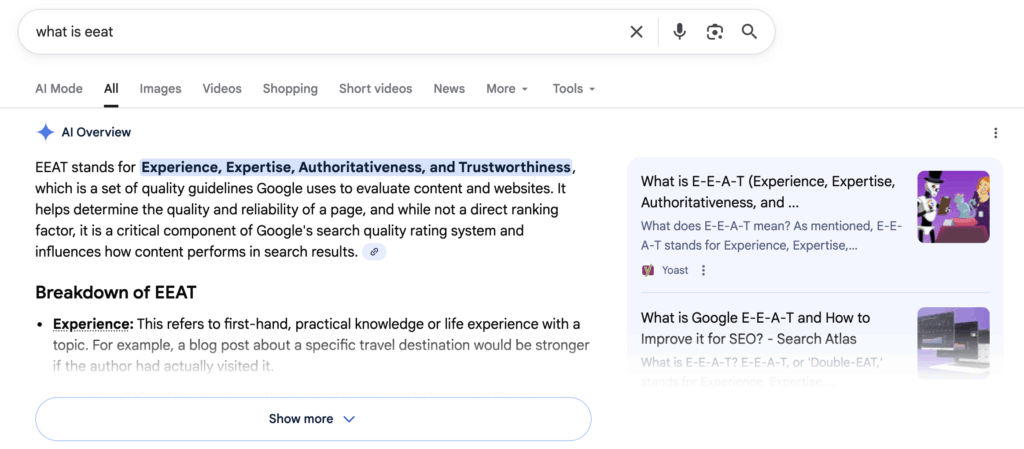
AI Mode has officially rolled out in Australia too, letting users ask complex, conversational queries and receive comprehensive AI generated answers without ever clicking through to a website.
Understanding AI SEO and adapting your strategies now is no longer optional… it’s essential to staying visible online – and why at Digital Nomads HQ we are bringing it to the front of our talking points, both with new and existing clients in our AI SEO services.
The Importance of AI in SEO Optimisation
Traditional SEO has always been about helping search engines understand your content so they can match it with the right user queries. AI SEO takes that further. It uses artificial intelligence to analyse data at scale, automate repetitive tasks, and optimise content in ways that would take a human team significantly longer.
Think of it like this: where traditional SEO might have you manually researching one keyword at a time, AI tools can process thousands of keyword opportunities in minutes, identifying patterns in search intent, competition, and user behaviour that you might otherwise miss. This doesn’t mean AI SEO is here to replace traditional SEO – it’s here to enhance it.
The real importance lies in what’s happening on the other side of the equation. Google’s algorithms are now AI powered themselves. The search engine uses machine learning to better understand what users actually need, not just what they type. That means your SEO strategies need to account for how AI systems interpret, evaluate, and present your information — not just how a crawler indexes your page.
The Power of AI Assisted SEO
Answer 3 quick questions to see what AI-powered SEO delivers for your business
How AI Transforms Insights and Data for SEO
One of the most significant changes AI brings to digital marketing is the ability to turn raw data into actionable insights at speed. AI SEO tools can analyse your website performance, competitor rankings, and audience behaviour simultaneously, giving you a clearer picture of where to invest your efforts.
Keyword research is a good example.
Rather than guessing which terms your target audience is searching for, AI powered platforms like Semrush, Ahrefs, and Surfer SEO use machine learning to cluster keywords by intent, identify content gaps, and even suggest the optimal structure for a page.
They can tell you not only which keyword to target, but how to approach the topic in a way that’s likely to attract both human readers and AI systems.
AI also helps improve the quality of your content optimization by analysing what’s already ranking and identifying what makes those results successful.
It might find that top-ranking pages for a given query all include specific data points, answer certain questions, or use particular schema markup – insights that would take hours to compile manually.
For business owners who don’t have the time or budget for a large marketing team, these AI driven efficiencies can be transformative. You get enterprise-level insights without the enterprise-level investment.
Understanding AI Powered Search and Its Implications
Here’s where things get particularly interesting – and a little more urgent.
Search is no longer just about Google’s ten blue links.
AI Overviews now synthesise information from multiple sources and present answers directly on the results page… This means users can ask follow-up questions that take them into AI Mode, a conversational experience where they may never visit your website at all.
Platforms like ChatGPT, Perplexity, and Gemini are also becoming search engines in their own right.
When someone asks one of these AI systems for a recommendation, the AI doesn’t crawl the web in real time the way Google does. Instead, it draws on its training data and, increasingly, retrieves live information from sources it deems authoritative.
If your content isn’t structured in a way these AI systems can understand and trust, you simply won’t be part of the conversation.
This has given rise to a new discipline known as Generative Engine Optimisation, or GEO. While traditional SEO focuses on rankings and click-through rates, GEO focuses on getting your brand cited and recommended in AI generated answers. The two aren’t in competition – they complement each other.
You need strong SEO foundations to be discoverable, and GEO strategies to ensure you’re being referenced when AI platforms deliver results to users.
For Australian businesses, this shift is accelerating. Research suggests that AI driven search is contributing to a measurable decline in organic click-through rates, with some websites experiencing traffic drops of 20 to 60 percent when AI Overviews appear for their target queries.
Enhancing SEO with Schema Markup and AI Tools
So, how do you actually optimise for this new AI search behavour?
One of the most practical steps is implementing schema markup on your website. Schema is structured data that helps search engines – and AI systems – understand the context of your content. It tells Google whether your page contains a product, a FAQ, a recipe, a local business listing, or a how-to guide.
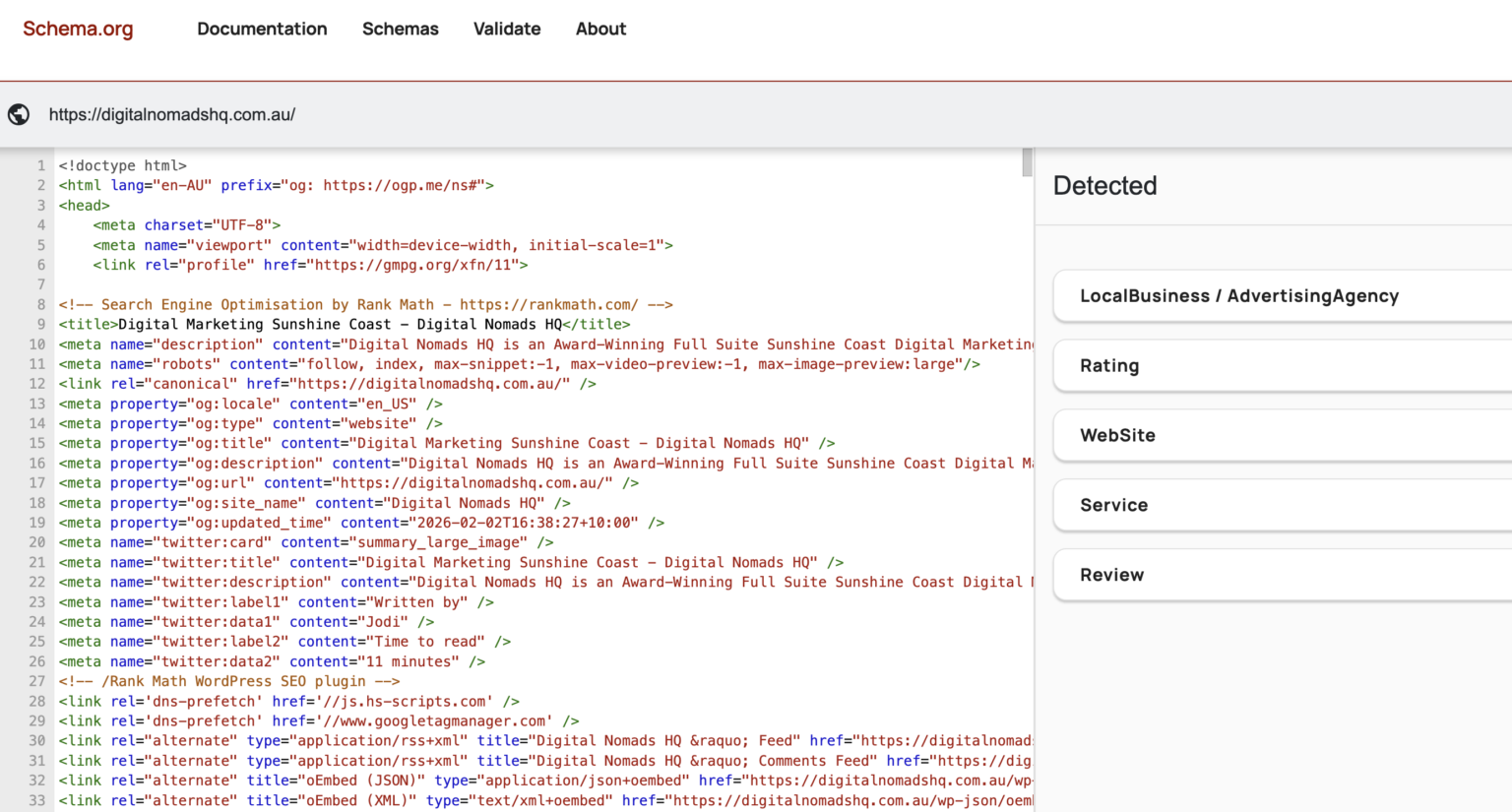
AI algorithms rely heavily on this kind of structured information to extract and present your content in search results, AI Overviews, and knowledge panels. Without it, your content might be perfectly relevant but invisible to the systems that are increasingly deciding what users see.
Beyond schema, AI SEO tools can help you optimise your content for the way people actually search now – conversationally.
With AI Mode encouraging users to ask longer, more natural questions, your keyword strategy needs to reflect this shift. Target intent-based queries and conversational phrases rather than short, generic terms. Write content that directly answers the questions your audience is asking, and organise it with clear headings and logical structure so AI can easily extract the most relevant sections.
It’s also worth auditing your online presence beyond your website. AI systems cross-reference information across platforms – your Google Business Profile, social media, industry directories, and review sites all contribute to how authoritative and trustworthy your brand appears to these algorithms.
Preparing for the Future of SEO: AI Driven Strategies
The future of SEO isn’t about choosing between traditional practices and new AI approaches — it’s about integrating both into a unified digital marketing strategy.
Here’s what that looks like in practice.
First, keep producing high-quality, original content built on genuine experience and expertise (EEAT). AI systems are getting better at identifying authoritative sources, and brands that consistently publish helpful, well-researched content will earn citations across both traditional search results and AI generated answers.
Second, diversify your search visibility. Don’t rely solely on Google. Understand how platforms like ChatGPT and Perplexity discover and recommend businesses, and ensure your content is structured for these new channels.
Third, invest in monitoring.
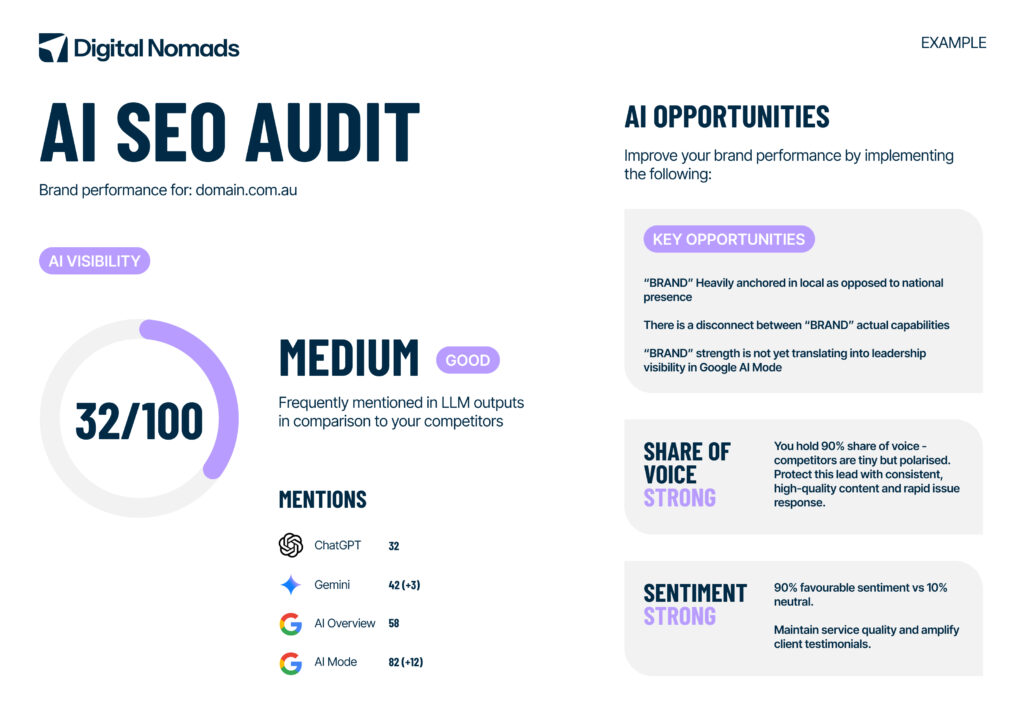
New tools are emerging specifically to track your brand’s visibility in AI search – how often you’re cited, in what context, and by which platforms. Just as you track your Google rankings today, you’ll need to track your AI visibility tomorrow.
Finally, think beyond keywords.
The businesses that will thrive in this new era are those that understand their audience deeply – what they need, how they search, and what kind of experience they expect. AI is changing the tools and tactics, but the fundamentals of great marketing remain: know your audience, solve their problems, and make it easy for them to find you.
AI SEO isn’t a passing trend.
It’s the evolution of how search works, and the businesses that adapt their strategies now will be the ones that maintain and grow their online visibility in the years ahead.