The Solar Marketing Playbook: Digital Strategies for 2026
Understanding the Solar Customer in 2026
Who exactly are you trying to reach? The solar customer of 2026 isn’t the same person who was tentatively considering panels a few years ago. Today’s prospects are hyper-informed, skeptical of “greenwashing,” and expect you to understand their specific needs instantly.
At Digital Nomads HQ, we see one common mistake: agencies guessing at personas. The reality is that “Australian Homeowner” is not a target audience.
- The Coastal Buyer: Concerned about salt mist corrosion and storm resilience (Sunshine Coast/Gold Coast).
- The Suburban Family: Driven by rising cost-of-living and “bill shock.”
- The Inner-City Business: Motivated by ESG ratings and green credentials.
Successful marketing requires hyper-segmentation. You must speak the specific language of the customer’s micro-climate and financial reality.
Residential vs. Commercial: The Split
Residential and commercial buyers operate on different wavelengths.
- Residential: Driven by the hip pocket. 75% cite money-saving as their main motivation. They need to see immediate ROI and “zero-down” options.
- Commercial: This is a logic-driven B2B sale. They care about cash flow, tax incentives (like instant asset write-offs), and scale efficiency.
The Opportunity: Only 15% of Australian commercial roofs have solar, compared to 35% of residential. This gap represents a massive profit margin opportunity for installers who pivot their digital strategy to target Decision Makers (C-Suite) via LinkedIn and targeted programmatic ads, rather than just casting a wide net on Facebook.
Building a "Performance-First" Solar Website
Think of your website as your best sales rep, one that works 24/7. But in 2026, a “pretty” website isn’t enough.
The DNHQ "Performance Architecture"
We often see solar websites that look great but perform poorly on Australian mobile networks.
- Mobile-First is Mandatory: Over 50% of solar searches happen on mobile. If your “Get a Quote” button floats off-screen on an iPhone, you are burning money.
- Speed Kills (In a Good Way): We focus on Time to First Byte (TTFB) and Core Web Vitals. If your site takes 3 seconds to load, bounce rates skyrocket. We build sites engineered to pass Google’s strict speed assessments, directly boosting your local SEO rankings.
Content That Converts (The "Hub & Spoke" Model)
Stop writing random blog posts. To dominate search results, Digital Nomads HQ utilises a “Hub & Spoke” content strategy:
- The Hub (Pillar Page): A comprehensive guide on a high-value term, e.g., “Solar Battery Storage in Queensland.”
- The Spokes (Cluster Content): Supporting articles that link back to the hub, e.g., “Tesla Powerwall vs. LG Chem,” “2026 Battery Rebates,” and “Is Off-Grid Worth It?”
This structure signals to Google that you are the Topical Authority in your region, pushing your site above competitors who just blog randomly.
Trust Signals: The Currency of Conversion
In the Australian solar industry, trust is hard to gain and easy to lose. With “solar cowboys” still a concern for consumers, your digital presence must scream legitimacy.
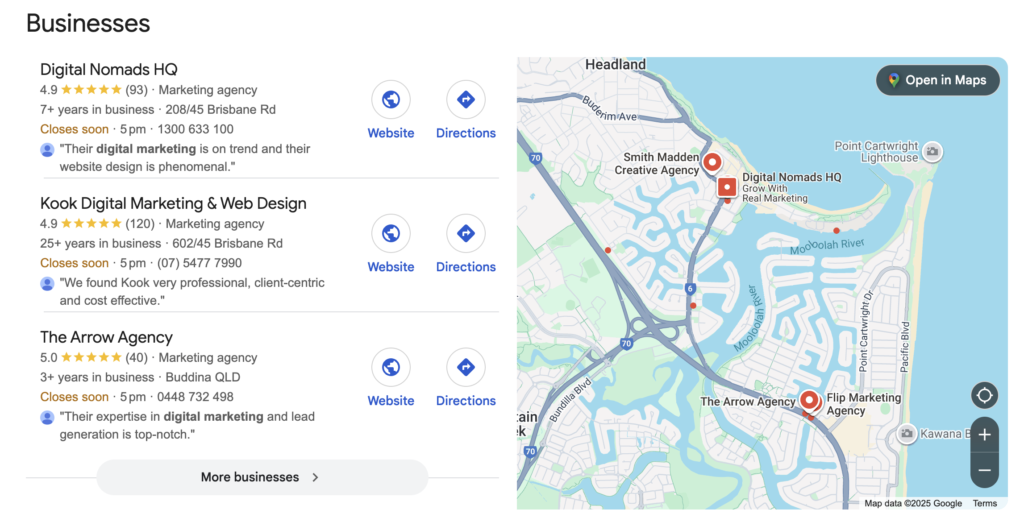
1. Google My Business (The Digital Storefront)
Optimising your GMB isn’t just about adding your address. It’s about Reputation Management.
- Upload high-quality photos of real local installations (not stock photos).
- Respond to every review.
- DNHQ Insight: A profile with active Q&A and recent photos gets 35% more clicks. Treat your GMB profile as a mini-website.
2. Accreditations as Conversion Assets
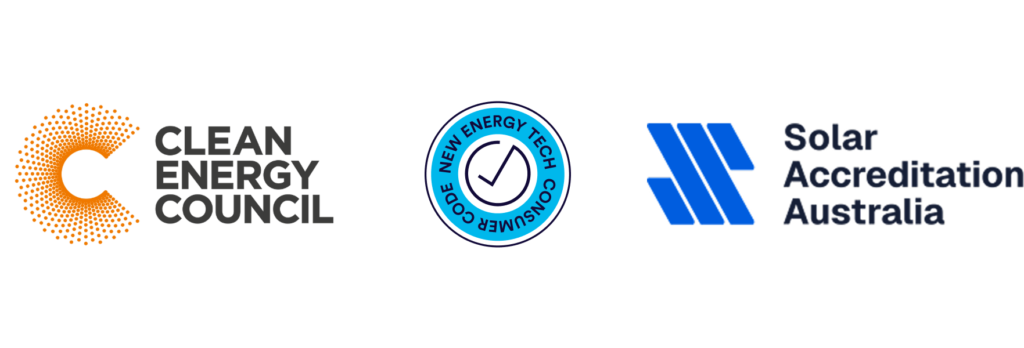
Don’t hide your badges in the footer. Place your Clean Energy Council (CEC), New Energy Tech Consumer Code (NETCC), and Solar Accreditation Australia (SAA) badges above the fold. These aren’t just logos; they are trust signals that differentiate you from lead-generation farms.
The "Search Monopoly": SEO & Ads Working Together
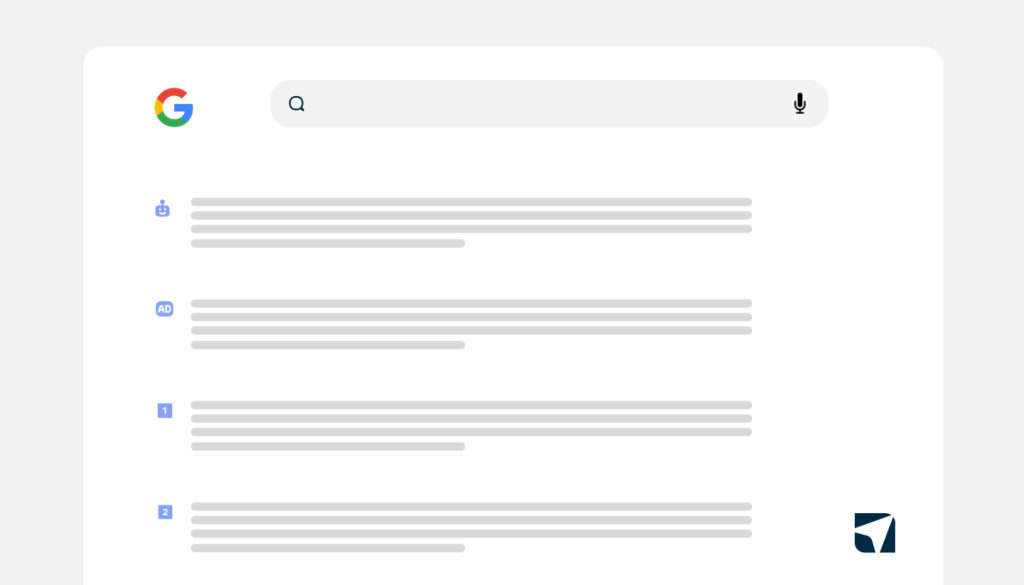
Many agencies treat SEO (Organic) and Google Ads (Paid) as separate silos. At Digital Nomads HQ, we run a “Search Monopoly” strategy.
The goal is to occupy three distinct spots on Page 1 for high-intent keywords like “Commercial Solar Brisbane”:
- Paid: The top Google Ad spot (using Local Services Ads for the “Google Verified” badge).
- Map Pack: The local 3-pack listing.
- Organic: The #1 organic search result.
When you dominate the visual real estate of the search results, you push competitors “below the fold” and establish instant market dominance.
Retargeting: The "nudge" that closes the deal
Solar is a high-consideration purchase (4-12 weeks). 98% of visitors won’t buy on day one.
- We implement cross-channel remarketing. If a user visits your “Commercial Solar” page, they should see a LinkedIn case study about ROI the next day.
- If a homeowner visits your “Battery” page, they should see a Facebook ad about “blackout protection” during storm season.
Killing Vanity Metrics: Analytics & CRM
The biggest pitfall in solar marketing? Measuring the wrong things.
The DNHQ "No Fluff" Approach
Many agencies report on “Impressions” and “Clicks.” You cannot pay your installers with clicks. We configure analytics to track Cost Per Qualified Lead (CPQL).
- Vanity Metric: “We got you 100 clicks.”
- DNHQ Metric: “We generated 20 leads. 12 were homeowners with bills over $400/quarter. 8 booked site inspections.”
The CRM Engine (HubSpot)
Many agencies report on “Impressions” and “Clicks.” You cannot pay your installers with clicks. We configure analytics to track Cost Per Qualified Lead (CPQL).
- Vanity Metric: “We got you 100 clicks.”
- DNHQ Metric: “We generated 20 leads. 12 were homeowners with bills over $400/quarter. 8 booked site inspections.”
Seasonal Content Calendar: The "Fiscal Year" Approach
Most solar companies plan their content around the weather. Smart companies plan around the wallet. Australian consumers don’t just react to sun; they react to bills, taxes, and policy deadlines. Here is how Digital Nomads HQ maps the year to maximise revenue, not just likes.
Q1: The "Bill Shock" & Back-to-School (Jan – Mar)
The Customer Mindset: Post-Christmas financial hangover. The first summer electricity bill arrives in February, often causing massive “bill shock” due to air conditioning.
- The Killer Hook: “Show Your Bill, Get a Quote.”
- Content Angle: “Why your AC is costing you $15/day (and how to make it free).”
- The DNHQ Play: Run “New Year, Zero Bills” campaigns targeting parents. Back-to-school means tight budgets; position solar as a cash-flow fix, not a luxury.
Q2: The "May 1st Cliff" & Pre-Winter Prep (Apr – Jun)
The Customer Mindset: Urgency. This is the most critical quarter of 2026 due to the Federal Battery Rebate Taper.
- The Critical Deadline: As of May 1st, 2026, federal rebates for batteries over 14kWh drop significantly.
- The Killer Hook: “Beat the Battery Tax. Install before May 1.”
- Content Angle: “The government is cutting your rebate in 30 days. Here is the math.”
- The Commercial Pivot (EOFY): June is pure B2B. Market the Instant Asset Write-Off aggressively to business owners looking to reduce their tax bill before June 30.
Q3: The "Grid Failure" Fear (Jul – Sep)
The Customer Mindset: Cold, dark, and cynical. Solar production is lower, but grid reliability anxiety peaks during winter storms.
- The Killer Hook: “The Grid is unstable. Your home shouldn’t be.”
- Content Angle: Pivot from “Savings” to “Security.” Sell battery backup as insurance against blackouts.
- The “Secret Season” Advantage: Installers are quietest in winter. Market this as the “VIP Installation Window”—no wait times, better prices, and systems ready before the summer rush.
Q4: The "Race to Christmas" (Oct – Dec)
The Customer Mindset: Panic buying. Homeowners want AC running guilt-free for Christmas lunch.
- The Killer Hook: “Zero $0 Summer Bills start now.”
- Content Angle: “Install now, pay nothing until 2027” (using BNPL finance).
- The DNHQ Play: Stop selling “panels” and start selling “A cool house for Christmas.” Visualise the family lunch with the AC blasting and the meter not moving.
Conclusion: Stop Guessing...
The solar market in 2026 is competitive, but the opportunity is immense for companies that move beyond “set and forget” marketing.
You need a strategy that combines technical excellence, local Australian knowledge, and ruthless data analysis. You need to move from “getting traffic” to “owning the market.”
Ready to future-proof your solar business? Don’t rely on generic advice or offshore teams who don’t know the difference between Ergon and Energex. Partner with Digital Nomads HQ. We are a local team of strategists, data nerds, and creatives who understand the Australian solar digital sector.